
Managing Arthritis Pain in Mumbai | Effective Strategies for Long-Term Relief
- Dr. Mayur Rabhadiya

- Apr 10, 2024
- 2 min read
Updated: Jul 13, 2025
“The pain you feel today will be the strength you feel tomorrow.” – Unknown
Effective Solutions for Managing Arthritis Pain in Mumbai
Introduction
Managing arthritis pain in Mumbai requires a personalized approach that targets inflammation, stiffness, and joint degeneration. Dr. Mayur Rabhadiya offers expert orthopedic care, using advanced treatments such as PRP therapy, GFC injections, medications, and physiotherapy to help patients live pain-free. Whether you suffer from osteoarthritis or rheumatoid arthritis, timely management in Mumbai can help preserve joint mobility and improve quality of life.

Understanding Arthritis
Arthritis refers to inflammation of the joints, resulting in pain, swelling, and stiffness. The most common types of arthritis include osteoarthritis, rheumatoid arthritis, and psoriatic arthritis, each with its own unique characteristics and treatment approaches.
Signs and Symptoms
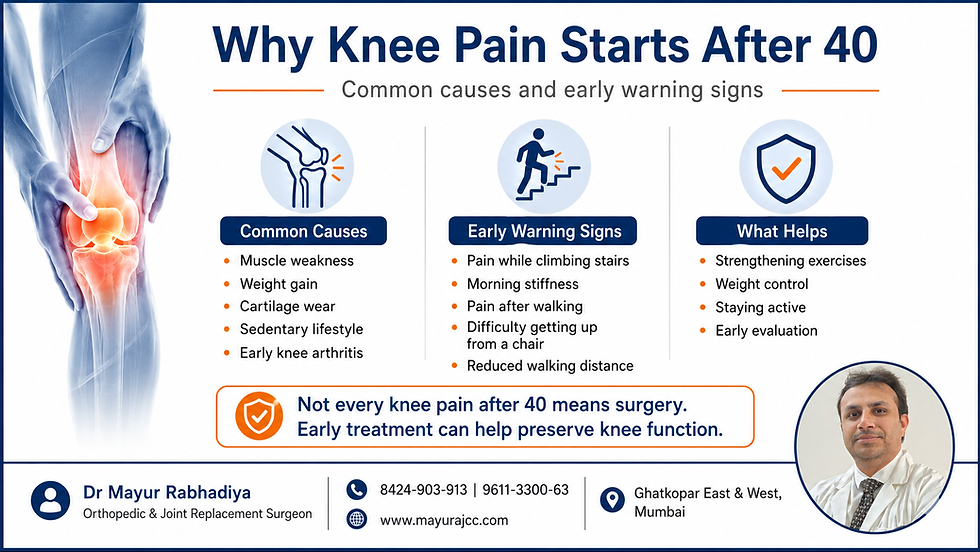
Joint pain, swelling, and tenderness.
Stiffness, especially in the morning or after periods of inactivity.
Reduced range of motion and difficulty performing daily activities.
Joint deformities or changes in joint appearance.
Effective Strategies for Relief
Stay Active: Regular exercise helps improve joint flexibility, strength, and overall function. Low-impact activities such as walking, swimming, and yoga are gentle on the joints and can help reduce arthritis pain.
Maintain a Healthy Weight: Excess weight puts added stress on the joints, exacerbating arthritis symptoms. Maintain a healthy weight through a balanced diet and regular exercise to reduce joint pain and improve mobility.
Use Hot and Cold Therapy: Applying heat or cold packs to affected joints can help reduce inflammation and alleviate pain. Experiment with both hot and cold therapy to find what works best for you.
Practice Joint Protection: Avoid activities that strain the joints excessively, and use assistive devices such as braces or splints to support weak or unstable joints. Practice proper body mechanics to reduce stress on the joints during daily tasks.
Medications: Over-the-counter pain relievers such as acetaminophen and nonsteroidal anti-inflammatory drugs (NSAIDs) can help manage arthritis pain. In severe cases, your doctor may prescribe stronger medications or corticosteroid injections for symptom relief.
Explore Alternative Therapies: Consider complementary therapies such as acupuncture, massage, or chiropractic care to supplement traditional treatments and alleviate arthritis symptoms.


Comments